What is the secret of the Ginosar Valley? Why was its fruit so sweet that people had to eat salted fish with it to avoid becoming intoxicated? And what does this have to do with the blessing of the tribe of Naftali (Naphtali)?
For the answers, treat yourself to four minutes of reading.
1. The Ginosar Valley, on the western shore of the Kinneret (Sea of Galilee), was so important that throughout the Second Temple and Mishnah periods, the lake's most common name was the “Lake of Ginosar.” What made it so important? We will see shortly.
2. In ancient times, particularly from the Second Temple period onward, the fruit of the Ginosar Valley was considered the finest and sweetest in Yisrael (Israel). It was so sweet that the Talmud describes the need to serve salty foods alongside it: "This was taught concerning those who eat the fruit of Ginosar. The salted food is the principal item, since it restores the heart, weakened by the fruit's sweetness" (Tosafot to the Babylonian Talmud, Berakhot 44a). The same passage tells of Reish Lakish, who was half a Tiberian, becoming intoxicated after eating Ginosar fruit, apparently because its high sugar content had fermented. Rabbi Yehuda HaNasi sent agents to follow him and make sure he reached home safely after eating the fruit...
Yosef ben Matityahu (Josephus) also describes the Ginosar Valley in words that stir the imagination:
“Lake Gennesar takes its name from the region bordering it... The region extending along Lake Gennesar and sharing its name is distinguished by its beauty and remarkable qualities. Its rich soil supports every kind of plant, with not a single variety absent. Its inhabitants plant every kind of tree, and the air is so mild that it suits the growth of species very different from one another...”
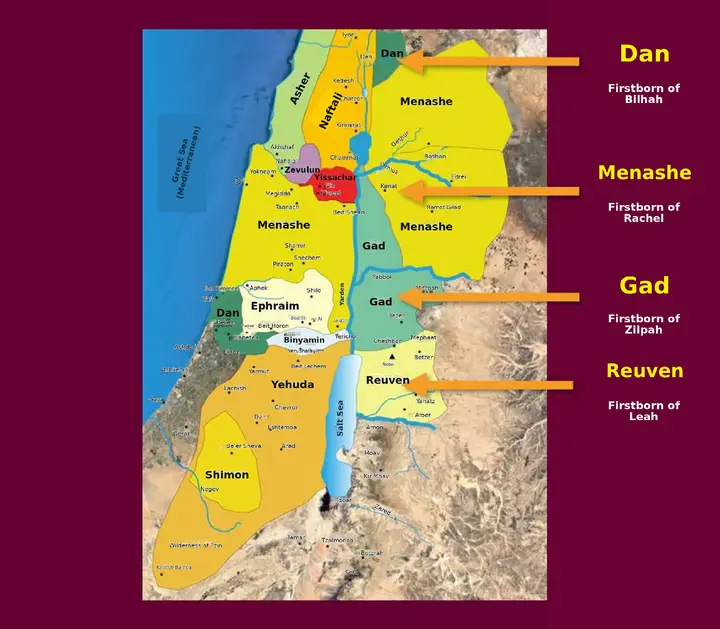
3. In biblical times, the Ginosar Valley belonged to the tribe of Naftali. In Vayechi, the Torah portion we will read this Shabbat, Naftali is described as “a hind let loose.” The Sages explain in the Midrash: “‘Naftali is a hind let loose’: this is the Ginosar Valley, which hastens to produce its fruit like a hind” (Bereishit Rabbah 99:12). In other words, the heat makes Ginosar's fruit ripen quickly. The Midrash on our portion goes on to explain that the whole valley was filled with irrigation channels serving its fruit orchards: “‘Naftali is a hind let loose’ refers to his land, which is entirely irrigated farmland.”
4. What made the Ginosar Valley so fertile? Three ideal agricultural conditions came together there: water, soil, and warmth.
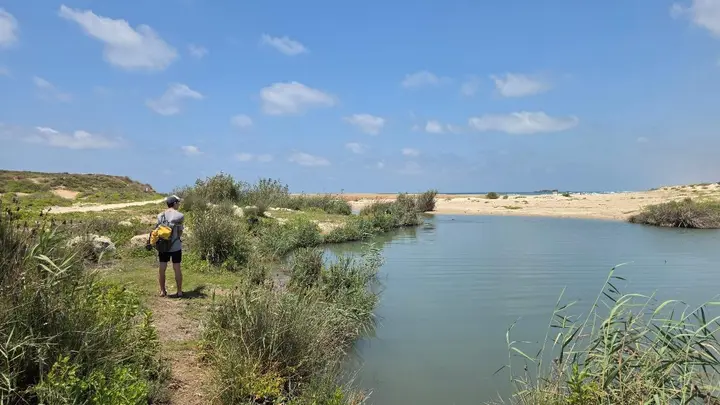
Four streams descend into the Ginosar Valley. In antiquity, they flowed throughout the year or at least for most of it. Nahal Amud lies in the north of the valley. In good years, its waters reached the Kinneret, crossing the entire valley. A little farther south flowed Nahal Tzalmon, a perennial stream with water year-round. Tzalmon has a remarkable story deserving its own essay, but briefly: in recent decades, most of its water was pumped away and it dried up. Happily, a few months ago, desalinated water from the Mediterranean began to be fed into it, and today it is a marvelous natural gem with water all year. South of Tzalmon rises Ein Nun, the source of Nahal Nun, which flows year-round in most years. Finally there is Nahal Arbel, whose abundant spring, Ein Arbel, supplied water throughout the year.
Four flowing streams therefore crossed the Ginosar Valley, making it possible to divert irrigation channels to irrigated fields and fruit orchards.
5. It was not only the water. The Ginosar Valley has deep, rich valley soil, alluvial soil combining material from the Galilee's limestone hills with mineral-rich basaltic earth. This unusual combination makes the soil especially fertile. The valley also lies about two hundred meters below sea level, making it very hot. We may find the heat oppressive, but agriculturally it enables a wide variety of fruit to grow and even makes the fruit sweeter.
6. The picture would not be complete without the Ginosar Valley's extra advantage. It was not merely an agricultural powerhouse but also one of Yisrael's largest fishing centers. In the valley's south stood Migdal Nunaya, the “Tower of Fish,” from nun, the Aramaic word for fish. Today's community of Migdal is named after that ancient town. In Greek, the place was called Taricheae, meaning “the place where fish are salted.” This indicates the scale of its fish industry: not merely local consumption but also salting fish so they could be sent to distant places.
How large was the Ginosar Valley's fishing industry?
Yosef ben Matityahu describes how, during the Great Revolt against Rome, most of the Jewish population fled toward the Kinneret after Migdal Nunaya fell to the Romans. A major naval battle took place between Taricheae's fishermen-sailors and the Roman army. According to his account, The Jewish War 2.635, there were 230 fishing boats and vessels on the Kinneret, with no fewer than four people in each. This shows the strength of fishing as a livelihood for the fishermen of Migdal Nunaya and the lake's other fishing centers.
A boat like those Josephus describes was discovered almost intact between the shores of Kibbutz Ginosar and present-day Migdal. It is considered one of Israel's most important maritime discoveries and is displayed at the Yigal Allon Museum in Ginosar.
7. In brief, the Ginosar Valley offered four abundant streams, fields, orchards, and irrigated plots bearing the sweetest fruit imaginable, deep valley soil, the blue Kinneret close at hand, and an extensive fishing industry. Perhaps those salted fish are the “salty foods” mentioned in the Talmud as accompaniments to Ginosar's fruit, sweeter than honey.
Now imagine yourself sitting beside the Kinneret, beneath a low-crowned palm, with salted fish, sweet fruit, and cool water. All of it, every bit, locally produced.
Could there be a greater Eden than this?
8. To finish, I can't help mentioning David Zehavi's wonderful, moving song, "Shabbat Has Descended upon the Ginosar Valley." This song touches me on so many levels that I'll try to devote a separate post to it. For now, I'll speak briefly about it. We try to play it before every Shabbat, and my children know that it is one of my two favorite songs.
What touches me so deeply in this song, beyond its wonderful melody?
To my mind, it is the very heart of the Torah of the Land of Israel, seeking a way of life that draws nourishment from the land's nature. The Shabbat described in the song is full of holiness and splendor, a holiness emerging specifically from ordinary, simple nature: the cypress in the hills, the hyssop in the wall, and the doves cooing in Nahal Arbel. Together they create a holiness that fuses the Jewish and the Israeli into the “Hebrew,” the synthesis of body and spirit in the Land of Israel:
Shabbat has descended upon the Ginosar Valley,
an ancient fragrance trailing at its hem...
Shabbat kissed the crown of the cypress,
kissed the hyssop in the rock.
And the thistle became a royal scepter
upon heights of singing silence...
With its hidden grace, Shabbat set trembling
the eyes of windows on every side.
And young women went out into the evening, singing
songs with ringing longing.
And the tenderness in the Ginosar Valley
became the soul of a noble Hebrew spirit.